
Hired Last Friday
Anthropic hired Robert Mahari last Friday to lead Claude for Legal. He’s spent almost ten years on law and AI - a law degree and a PhD across Harvard and MIT, then a spell helping run Stanford’s legal AI research center, then his own legal AI company. He’ll be working alongside Mark Pike, who spearheaded building the tools for Anthropic’s own legal team. Claude for Legal grew out of those tools.
And Anthropic isn’t the only one moving, they are just leading. OpenAI hired Jason Boehmig in June to lead its legal products - a former corporate lawyer before he co-founded Ironclad. Microsoft launched a Legal Agent inside Word end of April, built by a team it bought from Robin AI.
So in four months, three of the largest technology companies in the world each decided that law is worth its own team. Which means that general AI platforms are getting increasingly good at legal work. And every law firm has access to them.
Something else needs to separate your firm from the rest.
Ten Thousand Synthetic files
Harvey published something in the same week that got far less attention, but I think tells us a lot about where this is heading.
Harvey and a startup called EngramLab built a synthetic law firm. They named it Calderwood & Harkness and filled it with 250 matters across 46 clients and around 10k documents - memos, drafts, agreements, correspondence, simulating what a real firm would build up over years.
They built it to test one question. Can an AI agent dig through a firm’s own past work, find the right document, and understand it well enough to apply it to a new matter?
You might think this sounds like a lot of noise, because it was built for the companies making legal AI tools rather than for the firms using them.
But look at what Harvey chose to spend money on. Harvey could be working on almost anything right now, and they built a synthetic filing cabinet instead. Because the models already handle the legal thinking part well - the top five sit within two points of each other on the legal reasoning benchmarks, which I covered in an edition two weeks ago. What they need to handle now is law firms’ own past work. Finding the thing you wrote two years ago, working out whether it still applies, and using it properly on new work. That’s what the labs and the legal AI companies are racing on.
Now, having 10k documents isn’t a differentiator. Every firm has them. A pile of past work is potential, not an asset. What does differentiate is the judgment sitting on top of the pile. That judgment is the scarce thing. So, somebody has to sit down, go through that pile, and decide what is useful and what isn’t. We’ll get back to that in a minute.
And the bigger you are, the harder that sorting gets. A 400-lawyer firm has a huge, contested, politically awkward pile of files and needs a department to sort it out. That’s exactly why small firms have the advantage here. At your size the job is small enough to be done in a few weeks, which is not true above a certain headcount.
Windows or Mac?
All of this might sound like big-firm noise to you, so let me get practical. A small firm needs one AI platform, and everybody in the firm needs to accept it and work inside it. Which is hard if you have 4 of them.
Most firms are on MS365, so Copilot is the obvious one to add. They also have ChatGPT because two people pay for it themselves, Gemini because it arrived with Google, and Claude because somebody follows the updates in the legal space and knows this has become the go-to platform for legal work.
That’s nothing unusual, and it’s not like someone sat down and consciously decided all that at once. It happened the way tools always arrive in a busy firm, one person at a time, each of them solving their own problem in front of them.
Every platform needs its own connections to your documents, your matters, your email. Four platforms means building and maintaining that same wiring four times, and you end up looking after systems instead of clients.
But given where things stand with AI, the trick is going deeper, not wider. Don’t stay on the surface with each one of them. Make your best bet based on the market signals, pick one, and go deeper.
It’s the same with your operating system. Your firm runs on Windows or on Mac, not both. You picked one, everybody in the team got the same one, and everything got set up inside it. AI is going the same way. 3 years down the road, Claude, ChatGPT and Gemini will probably sit within a hair of each other on everything that matters to a law firm. So in the big picture, you are not making a bad call by going with any one of them.
Now connect that one platform to the three places your work already lives. Your documents, wherever they sit, whether that’s OneDrive, SharePoint, Google Drive or a document management system such as NetDocs. Your matters, which for most small firms means Clio. Or MyCase. Or Filevine. And your email and calendar.
One more after that. Connect it to a proper legal research platform such as Midpage using something called an MCP connector, so the answers Claude gives you are grounded to authoritative sources your people can easily click through and verify.
Supio surveyed 207 personal injury attorneys in March, and 99% said they will not use AI-generated content they cannot verify. 96% are seriously worried about output they can’t trace back to a source. And 76% said a direct connection to real legal research would make them more confident using it.
Read those as the reasons people at your firm quietly stop using the AI you bought them. They like it fine. But if they can’t check it, they won’t put their name on it.
February the Third
Which platform then?
I would pick Claude. And you should know that my team and I work with Claude every day, and it’s the platform we set up for our law firm clients. So weigh my reasons rather than the answer.
I should probably first clarify three things that get mixed up here constantly: the company, the model, and the platform.
The company is behind both the model and the platform.
The model is the engine.
The platform is the car. It’s the whole product built around it - the app your firm actually opens, works in, and sets things up inside.
The engines are important, but the cars around them matter even more.
To make that concrete, the companies are OpenAI, Anthropic, Google and Microsoft. The engines are GPT, Claude and Gemini. And the cars are ChatGPT and ChatGPT Work, Claude Chat and Claude Cowork, Gemini inside Google Workspace, and Microsoft 365 Copilot and Copilot Cowork.
Notice that Microsoft doesn’t build an engine at all, which makes its platform a very good example of how the same models produce very different results. Copilot runs on other companies’ models, OpenAI’s and Anthropic’s. That’s why you see Claude inside your Microsoft Copilot, but that doesn’t mean you get Anthropic’s car.
And why is that so different? Well, the AI model can only reason over the context it’s handed. So the biggest single lever is whether the platform is good enough to find the right document, the right matter, the right precedent. Bad search and retrieval caps a brilliant model at a mediocre answer.
The other difference is how the platform runs the task. How good it is at planning, executing, “remembering” the source, being aware of legal concepts, checking its own output and revising. Same engine gets you a very different result.
The third difference is what the platform can reach into. If it can open the actual file or search real authority, it doesn’t guess or rely on the AI’s generic training data. And whether your instructions and playbooks exist and the platform has the ability to integrate them, so it isn’t starting from zero every new conversation.
This is exactly what Legora tested, which I wrote about a few weeks ago. They ran the same models in June and again in July, changed nothing but the product around them, and the quality of the output went up 5%. Same engine, better car.
On the third of February, Anthropic released Claude Cowork with a legal plugin. Thomson Reuters fell as much as 18% during the day and closed down nearly 16%, the worst day in the company’s history. RELX, which owns LexisNexis, dropped 14% in its steepest fall since 1988. Wolters Kluwer lost 13%. About $285 billion came off software companies inside two days. Some even went as far as calling it a SaaSpocalypse, which I never fully bought into.
But it wasn’t a new model that Anthropic released that day, it was a new part of their platform that works in your files and carries out multi-step jobs on its own, and the market repriced an entire industry over it.
And I think Anthropic’s place as a leader in the legal space amongst the big AI providers will hold for a while, because they built strong foundations early. They wrote the standard that lets AI connect to other systems and the rest of the industry adopted it - the list of systems and tools Claude can connect to is the longest one going. Microsoft built Copilot Cowork with Anthropic, on Claude’s agentic model and the same execution framework, which tells you who is setting the pace. And Anthropic keeps hiring and prioritising Claude for Legal as a project of its own, which is why I think they’re in a very good position to stay the leader in legal for the next couple of years.
That said, I’d rather you picked any one of them and set it up properly than scratched the surface with all of them.
The Part That’s Yours
Let’s say you’ve picked one platform and connected it to your documents, your matters, your email and a legal research source. That’s two of the three pieces of an AI operating system for your firm.
Now the third and the final piece - your firm’s knowledge.
Connecting your systems means the AI can see everything you’ve got. Your knowledge is what tells it what to do with all of it, and it comes down to two things:
- Which of your documents should be kept.
- How your firm does the work.
First one is your precedent bank. Take your best 20 to 50 documents per practice area, date them, and mark which are current and which are superseded. Start there rather than with everything you’ve ever saved.
Second one gets written into three things. Playbooks for the documents you negotiate. Skills for the legal tasks that come round again and again. And case type packets, meaning one place per case type holding the checklist, the forms, the deadlines and the procedures that apply to that kind of matter.
Packets get read and followed by your staff and by your agents, so both do the work the same way. In small firms the founder carries both of these jobs - he knows the standard, so he revises the work and he explains it to the new hire. A packet lets him delegate part of that to the AI.
All of this should live inside your existing systems. If your firm is on Microsoft, put it in SharePoint and point your AI at it. If you have NetDocuments or keep your matters on Clio Drive, invest in the connector, because your AI is only as useful as the part of your firm it can see and reach. Then setup Claude Projects and Skills, to teach Claude how it should work with your knowledge.
Somebody has to own this. A folder of good documents that gets built in March, left unattained, will be handing back outdated information by autumn. The decision of what gets written into the folder stays with a person, but the housekeeping around it is exactly what an AI agent is good at.
Models and platforms change outside your control, and every firm gets the same ones. Your precedent bank and your written standards are still yours in five years’ time, and they’re worth more each year, because they keep growing with your knowledge and judgment.
If you want somewhere to start this week, take the document your firm produces most often and write down how it should be done. Not the template, but the standard - the decisions you make every time you correct someone else’s draft of it.
Legal AI in Action
🎬 Claude Skill Caught the UK Clause in a Dutch Contract
Back for part 2 with Gayk Ayvazyan, and this time we build the actual skill in Claude. Last week was the pre-work - breaking the employment agreement review into smaller pieces, picking one job to focus on, and finding skills other lawyers have already written that help you write your own. This week you see the four files the finished skill is made of, what goes in each one and why it’s built that way. You also see us test it, and why you never test a skill on the examples you built it from.
🎙 Law Is Much Bigger Than Contracts
Casey O’Grady is co-founder and CEO of Blueshoe, an AI-native plaintiff law firm in San Francisco that went through Y Combinator last spring. He came out of Harvard Law and practised, then spent four years in strategy consulting before starting Blueshoe. It began as a billing product for law firms, until they worked out that the only way to do it properly was to practise law themselves. Casey thinks legal AI got stuck on contracts while the part of law with real people and courtrooms in it was left alone.
We talked about why he flinches every time somebody says the word tool, what are the tasks he sees humans making more mistakes than AI, and his co-founder’s comparison of AI with early skyscrapers, where builders had steel in hand for years before they worked out they could frame a building with it.
Coming up!
🎙 Next Tuesday at 2pm CET!
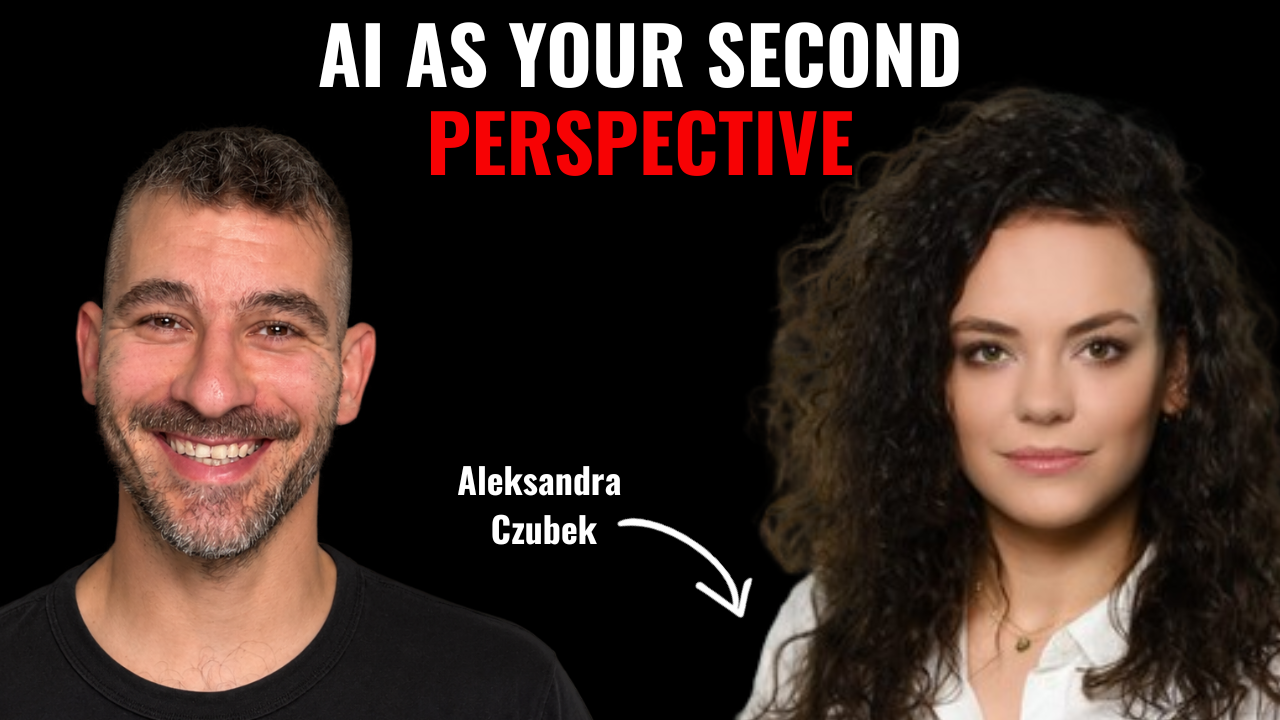
Next week’s guests on Rok’s Legal AI Conversations is Aleksandra Czubek, a Polish-qualified advocate and TMT/IP associate at Addleshaw Goddard in Warsaw, where she advises on the EU AI Act, the Data Act and GDPR. Her firm has Harvey and Legora, and her team still can’t make the business case for either.
She tells me what she does instead - chains Claude to find the risks, ClauseBuddy to redline, the internal chatbot to write the client email. We also get into whether it’s safe to put client data into AI, and the four things she checks in any contract review, which she only wrote down properly once she started handing parts of it to AI.
Each edition of Legal AI Brief brings practical lessons from firms using AI safely.