
Seventy One and Seventy Five
Clio just recently put out a report on solo and small law firms. Seventy one percent of solo practitioners and seventy five percent of small firms are now using AI to help with legal work. Fewer than a third of them say it has increased their revenue. At enterprise firms, nearly sixty percent say it has.
So plenty of small firms are using AI without earning more from it, while bigger firms are.
You’ve probably wondered whether your firm is using this wrong - and I don’t think you are.
Not Enough Volume
A while back I was talking to a paralegal working at a plaintiff firm and I feel like I’m having different flavors of that same conversation over and over again.
He uses Claude daily and really likes it. So I asked him which of his tasks it should take over for good, and he couldn’t name one. He hadn’t done any single thing often enough to call it repetitive. And even the work that does come round again is only partly the same each time - a demand letter has twenty small decisions inside it, and he has to make most of them while the work is happening. He can’t just review the whole thing at the end.
He’s right about his own job. His week has no single big process in it. He chases medical records on a case with more than thirty providers, one of which only accepts faxes and another that only uses its own portal. He reads a bill to work out which treatment belongs to the crash and which belongs to a knee the client hurt two years ago. He sends a lien letter to a chiropractor, asks the other side for an extension on discovery, and pulls a complaint out of a folder holding five versions of the same document. Each of those is small, and each one is different from the last.
And none of them comes up often enough on its own to justify buying software for it.
A lot of plaintiff PI firms run on advertising and volume. In that case, it makes sense to have a special AI tool for medical chronologies alone.
Plenty of plaintiff firms run the other way. Work comes in from other attorneys and from former clients, which takes years to build, and it means one or two new matters a month rather than fifty.
So we asked a different question. Not which tool to buy, but how to make fifty small jobs cheap to do without the work getting worse.
That’s fixable, but until it’s fixed, every one of those jobs keeps landing on the person who knows how it should be done, and they do it by hand.
Same Correction, Every Time
I spoke to a managing partner who has a great example of what one of those small jobs looks like when it lands on his desk.
Defense interrogatories arrive with one question that’s really two. Name everyone who knows how the accident happened, it says, and then name anyone with information about the claims of injury. Second part sits at the end of a long sentence and it’s easy to read straight past. So the answer goes out with the officer who worked the wreck, the plaintiff and the defendant on it, and no treating doctors. He catches it and adds them. He keeps on making the same correction.
His paralegals know who the treating doctors are without looking. But he’s the one hunting through the file for the names, because he’s the one revising.
He knows exactly how the work should be done, and that’s what makes him the constraint. Everything that would settle those fifty small jobs sits in his head, and the one person who’d have to write it down is the one whose week is already full of doing them.
And he can’t hand it over. His paralegals could write down what they do, but not what the standard should be. That’s his call, and it should stay his call.
Founder’s Criterion, Followed Every Time
But every time he fixes that answer, he’s running the same few rules in his head. So essentially, those rules should be written down once as a criterion.
For example:
-
When defense interrogatories ask who has knowledge of the case, read that as two questions, not one.
-
First question is who knows how the wreck happened - the officer who worked it, the plaintiff, the defendant, anyone else who was at the scene.
-
Second question is who has information about the injury - the treating physicians, the chiropractor, whoever actually treated this client.
-
Take those names from the provider list and the medical records in the matter, and put next to each one where it came from.
-
Draft the answer with both halves filled in. If no treating provider turns up in the file, say so at the top.
So that standard gets set once instead of every time. Every draft still gets read, but it’s a draft that already has the right people in it.
Now, you don’t have to write the actual skill file yourself. Give Claude your criterion and two or three examples you were happy with, and ask it to create a reusable skill for you. Then read what Claude gives you, do a few adjustments, and try it out. I promise you, the first version will be better than you expect.
You can see the process in this week’s video - I sat down with a lawyer of twelve years and we built one skill together from an employment agreement, start to finish. You can find it in the Legal AI in Action section below.
And that’s what makes skills fit a firm with fifty small jobs and not much volume in any of them. You don’t have to buy a special tool and nobody should be building expensive bespoke workflows. Writing the first version of the skill takes about as long as explaining the job out loud to a new hire, and once it exists it’s easy to improve. So you do the next one for the demand letter, then the lien follow-up, then the open records request.
And that’s how a firm goes from a few people using Claude as a chatbot to Claude being the firm’s main AI operating system, taking care of a good part of the daily work.
Someone Has to Own the Setup
Now, making the first few skills is easy. But writing the criteria down for all the fifty jobs and keeping them alive while everyone is busy with their own work is a different job, and usually this is where things stall. And when they do, everyone goes back to their old way of working and you lose momentum.
Somebody has to sit with the person who knows the criterion, ask the questions, create the skill, test it on a real matter, fix what comes out wrong, and then start the next one. Large firms staff that job. They have innovation leads, knowledge lawyers, legal operations people whose whole purpose is doing this. A firm of six or fifteen people doesn’t have that role.
A managing partner I’m working with in a completely different jurisdiction and practice area, got there himself a few weeks ago. He reached out saying he’s at an inflection point, so busy that he doesn’t think he’s doing it the right way anymore. He doesn’t have time to work out whether his team is using the tools they already have at their full potential or are they just scratching the surface.
By the end of our first call he was making a list of all the documents his firm turns out every week, so we could start designing his AI operating system on Claude. Because what he’d worked out is that he needs somebody alongside him for a while to get this out of his head, so the firm keeps running smoother while he gets on with his day.
Which is roughly where this ends up for most founder-led law firms. AI stopped being something you buy once and became part of how the firm runs, and anything that’s woven into the work needs somebody looking after it every week. Large firms already have that person. Smaller ones have to decide whether to build the role or bring it in.
Legal AI in Action
🎬 A Lawyer Builds His First Claude Skill
Following last week’s video, Gayk and I recorded another one, this time about the work that comes before you write a skill. We narrowed employment agreements down to one job - an employer sends over their own template for a new hire, and Gayk reviews it. Then Gayk described what he needs in front of him before he can start working on the review, and what he sends back to the client when he’s done. That is what Claude needs to know. And we show you a trick you can use to help Claude create a specialized legal skill for you.
Stay tuned for the next video in Claude for legal series.
🎙 Nobody Is As Far Ahead As You Think
Kim Mason runs Nailed AI in Winchester, working with small and mid-sized firms whose leaders want to move on AI without pretending they already understand it. She spent seven years as a fractional director advising more than twenty-five small professional services firms, and ran the AI rollout inside her last company - from a few people on ChatGPT to paid licences across the business, power users, and a roadmap. Kim thinks that the only real experts in this market are the people who have spent their time learning by doing and showing others the way.
We got into who inside the firm should get a new title and thirty percent of their week for this, why adoption spreads unevenly and leaves leadership feeling out of control of their own people, and why any AI initiative goes nowhere without proper backing from the top.
Coming up!
🎙 Next Tuesday at 2pm CET!
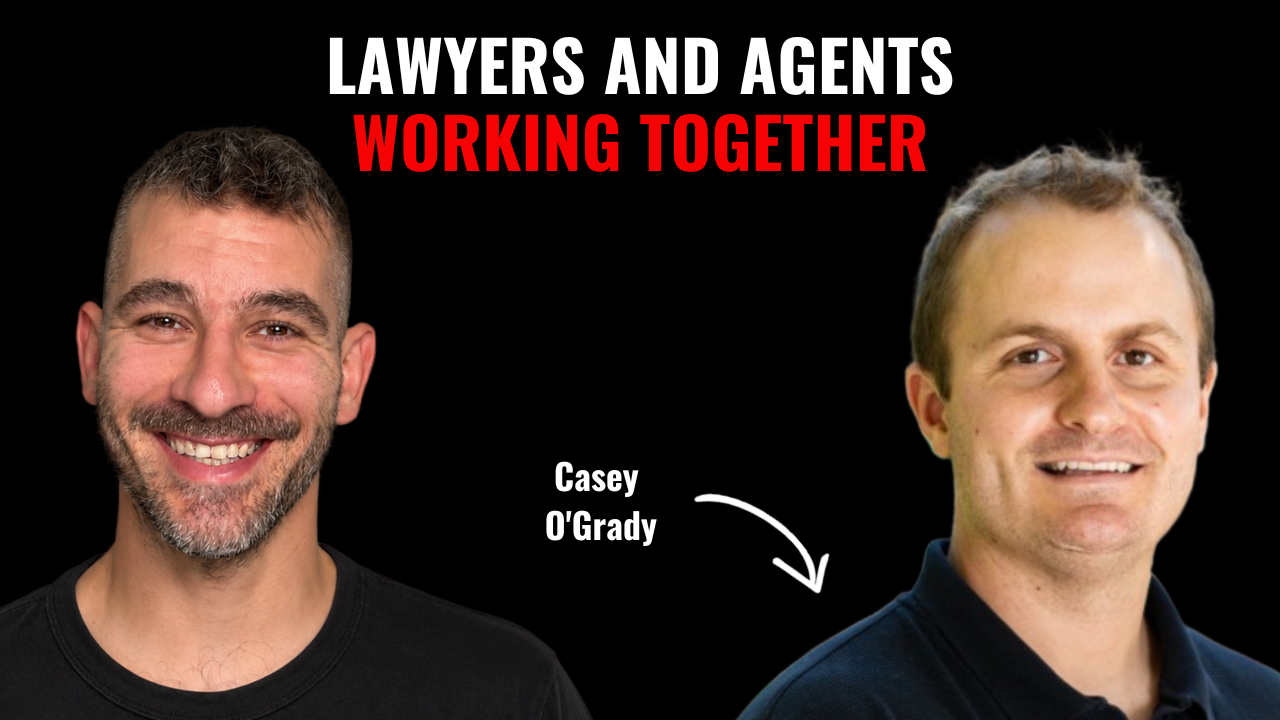
Next week’s guests on Rok’s Legal AI Conversations is Casey O’Grady, co-founder and CEO of Blueshoe, a VC-funded, AI-native plaintiff law firm. He went from Harvard Law into practice, spent four years in strategy consulting after that, and took Blueshoe through Y Combinator in spring 2025. Blueshoe started out as a billing platform to help law firms, then worked out that the only way to do this properly was to practise law themselves. They became a law firm.
We discuss why the legal AI conversation got stuck on contracts while the courtroom side was left alone; the case a local attorney spent four years trying to settle for a million dollars, which produced a fifty million dollar verdict six months after it reached the right trial lawyer; and why Casey flinches every time somebody says the word tool.
Each edition of Legal AI Brief brings practical lessons from firms using AI safely.