
Bought But Not Used
Microsoft just raised Microsoft 365 prices, and the numbers that came out a few days later reveal a pattern that goes way beyond Microsoft. Fewer than 4.5% of Microsoft’s 450 million commercial Microsoft 365 customers pay for Copilot. Of the ones who do pay, only 20 to 30% of them touch it in a given week.
Read that twice. The people who already said yes, who already pulled out a credit card and got the license, mostly don’t open the thing they bought.
If your own AI rollout stalled after the first week of excitement, this is why, and it’s not really about the tool. It’s about a skill nobody sat your team down and taught them: recognizing, in the middle of an ordinary Tuesday, where AI would have actually helped.
The Missing Skill
Last week, Anthropic launched Reflect, a dashboard buried in Claude’s settings that shows you how you’ve actually been using it. And it’s more than a usage bar, they are trying to picture the whole recap: the topics you spent time on this month, your busiest day and hour, how your tasks break down between drafting, research, scheduling, “autopilot” work. It even nudges you with questions like “what’s one thing you want to keep doing yourself, even if Claude could help”, and it’s built around what Anthropic calls the 4D framework: Delegation, Description, Discernment, Diligence.
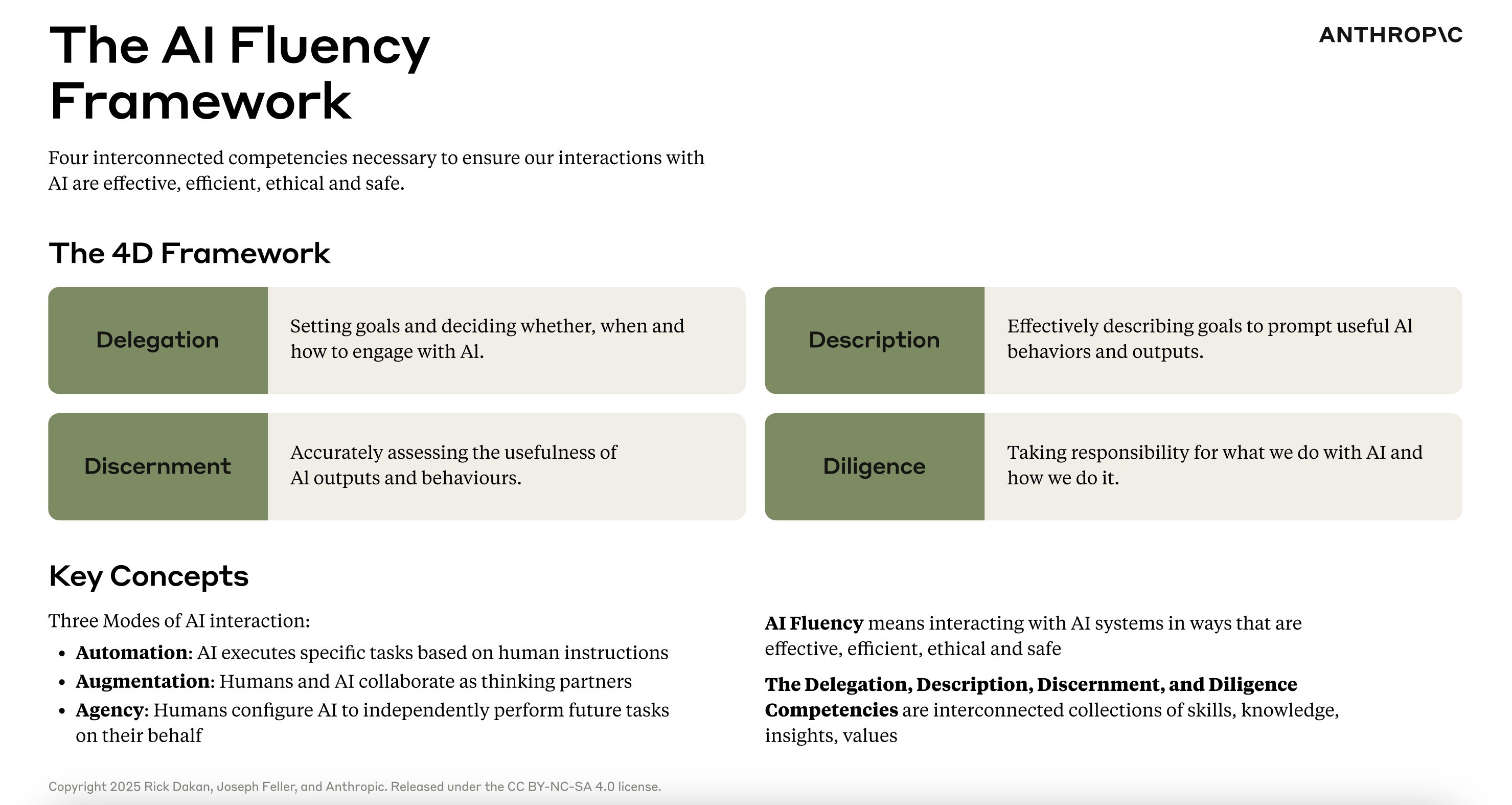
Discernment is really the one nobody can just hand you, and the one that really makes or breaks the ROI on your AI investment. It’s the skill of accurately judging when AI output is actually good, and, earlier than that, of noticing the moment in your day where using AI would have been the right move at all. Reflect is a very useful tool, but it shows you that moment after it already passed.
Next thing the dashboard shows you is the specific thing you’re already doing well and puts a button right underneath that line so you can build a project around exactly that habit. It does the same thing with your prompts, pulling out the one that actually got you what you needed and handing you a button to copy it straight into a skill.
Access to AI is already not a problem anymore for law firms, most of your lawyers already have some AI tab open on their laptop most days. However, they are missing instinct for the moment in an ordinary Tuesday when reaching for AI would actually help, and knowing how to effectively use it once they do.
You can’t develop the judgment of when AI helps by thinking about it in the abstract, you develop it by doing real work with it, and then having AI show you, concretely, “here’s where you were right, here’s where you missed it, here’s how to productize a unit of your work”.
A thing to note, Reflect is currently in beta for Free, Pro, and Max, so not yet on commercial plans. Even Anthropic is rolling this out on individual accounts before firm-wide ones, which tells you where they think the real behavior change starts.
That’s really the underlying point of our trainings, teaching your people to use AI as a partner, an assistant, using AI to actually help them work with AI on a personal, day-to-day level. Reflect is just a step toward that, one that again proves the ways of working are changing, and you’ll see the value of AI in your firm the moment your people internalize it.
Your Client’s AI is Now Your Problem
Once your lawyers get good at this, once they really learn the new way of working with AI, you’re in a position to fix one of the most annoying problems firms like yours have right now.
In-house teams and companies now use AI to do the easy stuff themselves, the simple work that used to come to you. That work is already going away and a lot of my law firm clients are feeling it.
Now, when your clients finally do reach out to you, it’s not a clean start anymore. It’s their own AI’s bad output. You get stuck fixing a mess instead of doing the real work from the beginning, often having to bill more than you would if you would just be included from the start.
The big firms are already dealing with this same thing, just on a bigger scale. And some of them decided to get ahead of it instead of just losing the work.
Debevoise built a tool called STAAR. Instead of a client calling a Debevoise lawyer every time they have a simple AI compliance question, the client just asks the tool directly, and the tool gets smarter with every client that uses it. Cooley did something similar with a tool called GO Lab, built for founders who don’t have a lawyer yet. Without it, that founder would just use a generic AI tool on their own, get it wrong, and hand someone else a mess to clean up later. Cooley built the thing the founder would have used anyway, except now it’s trained on Cooley’s own standard terms.
Here’s the boutique version of the same idea. You don’t need to build a bespoke tool for that. Your team, once they’re actually good at using AI, can help your clients build their own skills for the simple, everyday stuff. Now, before their AI agent sends you anything, it’s actually working off the right information instead of a generic one.
You can take it even further too. Turn it into an actual service: advising your clients on how to set up and use AI well for their own simple work, so what lands on your desk is useful instead of a mess.
AI that just makes your own lawyers faster doesn’t help your bottom line when you bill by the hour. But when AI helps you win and keep a client, that’s real money coming in, and that’s a much greater value add to your law firm.
Turn On What You Already Have
This week’s update on tools you already pay for: Claude Cowork now works on both web and on phones, not just the desktop app. Which sets the ground for one of the last compliance frictions with Cowork for law firms to be solved. So far, Cowork conversations were only living on actual computers and couldn’t be easily centrally stored and managed for auditing purposes. Anthropic moving Cowork conversations to cloud was a prerequisite for this to be possible. Keep in mind this is still in beta, and only on the Max plan for now.
Another update, and already generally available for all Claude Team and Enterprise accounts, the Microsoft 365 connector started letting Claude actually do things inside Microsoft apps, not just search through them. It can now draft an email inside your Outlook, manage your calendar, create and update files in OneDrive and SharePoint.
However, it doesn’t turn on by default. If your firm already has the M365 connector enabled, here’s what you actually need to do. Go into your Claude settings and turn write tools on for your team. Then have whoever manages your Microsoft 365 setup, your in-house IT person or your outside IT provider, approve it on their end too. That’s it. Now Claude can actually send an email or edit a file.
Before you go looking for a new tool, check what the ones you already pay for can actually do. Twice this month alone, inside the same stack most of you already run, the answer changed.
Legal AI in Action
📰 Interviewed for LegalVIS WIRE
Legal AI adoption went from 31% to 69% in a single year, and in this interview I get into why that speed matters less than people think, how confidentiality, supervision and governance duties land on a boutique exactly like they land on a firm ten times its size and how to go about it, and why the “AI-native firms are coming for you” pitch gets a boutique’s real moat backwards.
Read the full interview here →
🎙 LegalTechTalk Interview Nr. 4: The Question After the Answer
Daniel Lönnberg is head of data and innovation at Familjens Jurist, Sweden’s largest family law firm. He built their Digital Lawyer, a free legal AI tool that provides advice to anyone in Sweden. We got into his take on human in the loop and where will human add value in the future, once the systems get much better. He also talked about his hardest lesson running AI in a law firm so far.
A new interview drops every few days - watch on YouTube or follow the full series on my site.
🎬 Every Firm Feels Behind
Firms that haven’t picked a tool feel behind, and firms with seats for everyone feel behind - which tells you the tool was never the thing. So I walk the whole map: the setup you do once, the mentality shift that get your team using it on their work effectively, the rhythm that keeps the wins from dying in one person’s chat window, and why running your own model belongs much later than you think.
🎙 The Context Layer Agents Need
Dillon Harindiran is a second-time founder and ex-J.P. Morgan banker, now co-founder and CEO of Context Systems, which builds the context layer sitting underneath AI agents for founder-led firms serving startups and VC funds. We got into why knowledge management has always stalled inside law firms and how AI is finally the thing that closes that gap, his contrarian take that your DMS is not where the real story lives, and why the next big fight in legal AI is going to be about.
Coming up!
🎙 Next Tuesday at 2pm CET!
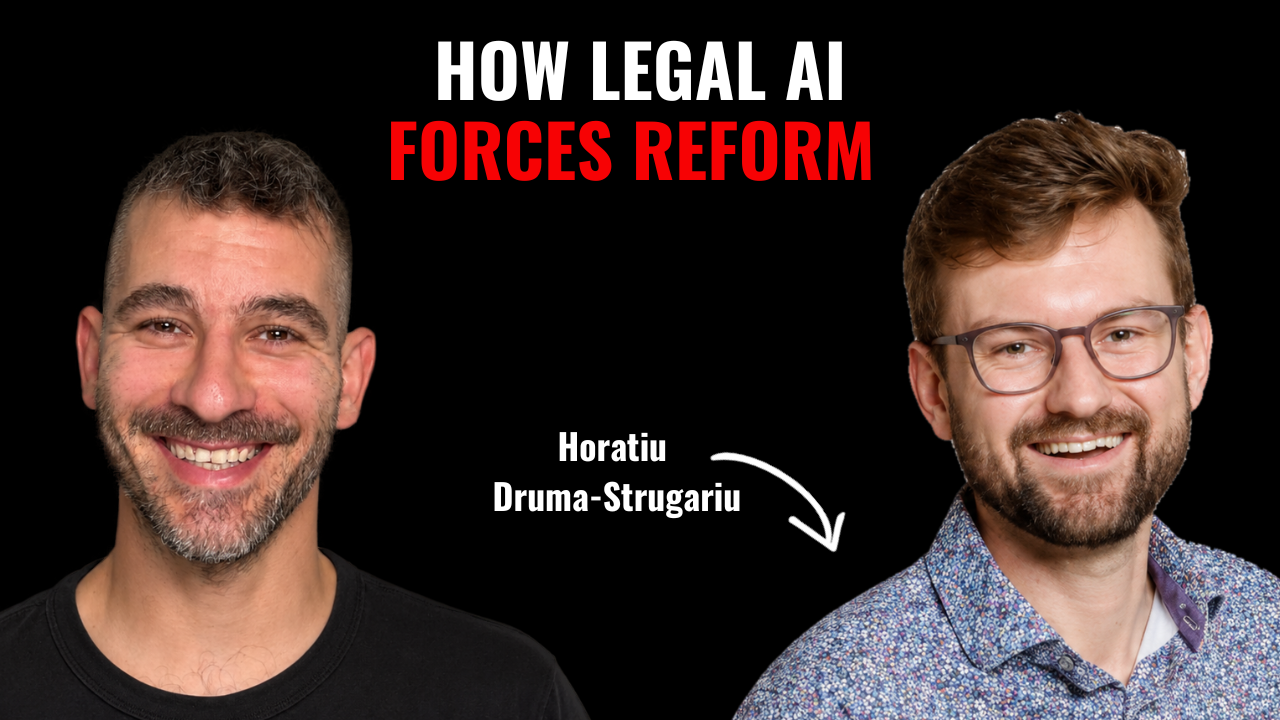
Next week’s guests on Rok’s Legal AI Conversations is Horatiu Druma-Strugariu, a former litigator who spent years building out Alexi, an AI legal research platform, before running AI and legal solutions inside a global law firm, and is now Principal Legal AI Engineer at SigmaSight.
We discuss his prediction that law firms will start looking a lot different, becoming product companies themselves, whether general AI platforms like Claude or ChatGPT are good enough for legal work, what “earns” you a point solution; and why he thinks the AI conversation is stuck on high-value deals when the real need is uncontested divorces, legal aid, and the routine work most lawyers actually deal with.
Each edition of Legal AI Brief brings practical lessons from firms using AI safely.