
This Week’s Theme
It’s April 2026 and you’re three to ten AI subscriptions in. Guess what? Your practice still runs the same way it did before.
The contract review tool gets used when someone remembers it is there, the research product is open in one browser tab, and the automation nobody finished setting up is still sitting in the account.
The tools are not the problem. You just never made the decision that makes these tools useful in the first place.
I have spent the last year interviewing lawyers/founders building AI-native practices from zero and working directly with the ones inside existing practices trying to make this transition. Over time, the pattern is easy to see, and it’s the same in both directions.
The ones who created something that actually works committed to one specific thing first. Everything downstream, which tools to buy, what to document, what to automate and what to leave alone, followed from that commitment. The ones still accumulating tools skipped that question entirely.
The Question That Comes First
Here is the question. What does your practice actually do? Not at the level of practice area. At the level of: here is a specific type of work we do repeatedly, here is what comes in, here is what we do to it, here is what comes out.
If you can describe that precisely enough that someone who has never done it could follow it, you have something to build on. If you cannot, you are not ready for AI-nativizing it. And most practices cannot. To start with why, the knowledge lives in someone’s head. And that works fine there until you try to hand it to an AI.
Underneath every legal practice there is an operational layer that has nothing to do with legal judgment. For example, how a new matter gets opened or how the information a client sends in gets turned into something a lawyer can actually work from. How the work that gets done becomes an invoice that goes out on time.
Nobody needs to go to law school to think about this stuff. But this is exactly where the invisible friction lives, and it is the part that becomes automatable the moment you describe it precisely enough.
Getting this right does not require starting over. Saying that, you do have to be specific about what you do and honest about where it currently breaks down. When it runs cleanly, the time that was going into intake and admin and billing reconstruction is suddenly available for the work that actually requires a lawyer, like research and strategy. The things worth charging for. That is the next level. You just cannot get there without this one.
What Happens When You Skip It
Automating the wrong thing just means you get to the wrong result faster.
Buying a contract review product before you have a clause library and a clear review process gives you confident-looking outputs you cannot fully trust. Connecting an automation to tools that were never properly set up does not fix the tools. It automates the chaos.
The result is ten subscriptions, three of which do the same thing, none of which talk to each other, and you are using two of them consistently because those are the ones that made sense when you first installed them. And the practice has not changed.
Decide what you are optimizing for first. The tool and build decisions become much easier after that.
The Sequence Is the Same Wherever You Start
Whether you are building from zero or working with what you already have, the sequence that works is the same. Decide what you are optimizing for. Describe the work underneath it in enough detail to follow. Build from there.
The practice size does not matter. The tools you already have do not matter. What matters is whether you answered the first question before you bought anything. If you did not, you can still answer it now. That is actually the easier starting point, because you already know where the friction is.
Legal AI in Action
🎬 AI Agents vs Workflows: What Lawyers Are Getting Wrong
Why agents and workflows are not the same thing, what happens when you deploy the wrong one on client work, and the three questions that tell you what you are actually buying before you sign anything.
🎙 The Three Career Paths for Lawyers Who Want to Stay Relevant
Ben Chiriboga is the founder of Reframe.lawyer and a former Chief Growth Officer at Nexl. In this conversation we talk through why the legal profession’s talent problem is fundamentally a culture problem, what the three career paths actually look like for lawyers navigating the AI transition, and why the $4,000 billable hour and the AI-native law firm are not contradictions, they are just solving for completely different parts of the market.
Saturday’s LinkedIn Live Session
These sessions are running bi-weekly. The next one is on Saturday, 11th of April at 3pm CET (10am EDT, 7am PDT).
The sessions are open to everyone, but if you have a specific situation you want to work through in a smaller setting, you can send me an email directly.
Last Saturday we unpacked what AI native actually means and where most practices sit on that spectrum, the chicken-and-egg problem of data and workflows, why Copilot keeps disappointing firms that already have everything in Microsoft, the biggest misconception lawyers have about how model training actually works, and why switching AI providers is a lot harder in 2026 than it was two years ago.
🎙 Next Tuesday at 2pm CET!
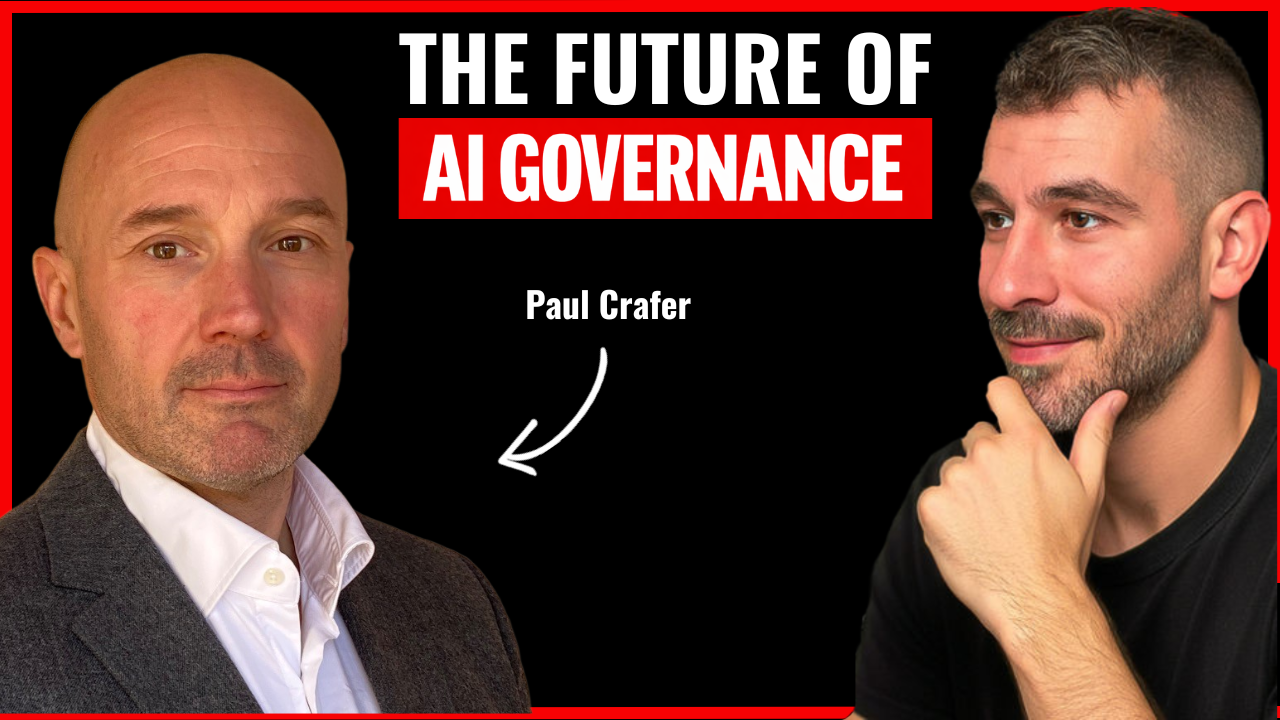
My next guest on Rok’s Legal AI Conversations is Paul Crafer, VP for AI Governance at Assessed Intelligence and Fellow at ForHumanity, where he has spent the last year drafting audit standards for AI systems across more than 50 certification schemes worldwide.
We talk about why governance keeps stalling at policy and never reaches practice, what an audit actually looks like for a law firm using AI on client work, why vibe-coded tools inside regulated organizations are a governance problem nobody is talking about, and what inter-agent vulnerabilities mean for any firm running more than one AI system at the same time.
Each edition of Legal AI Brief brings practical lessons from firms using AI safely.