
This Week’s Theme
A story spread across LinkedIn last week claiming that Y Combinator had told founders to build AI-powered law firms and compete directly with lawyers. Comments debated regulation, unauthorised practice, and whether Silicon Valley was about to disrupt the legal profession. When journalists traced the claim back to source, they found no YC publication that actually said it.
The speed with which the story had spread despite the fact it was unverified, reveals where legal decision makers currently are - focused on whether AI replaces lawyers, while the more operationally relevant question, what kind of AI is being deployed, and who controls how it behaves, is not part of the conversation at all.
At the same time, a UC-Berkeley study published in the Harvard Business Review tracked what actually happened when a 200 person technology company adopted generative AI over eight months. Workers did not reduce their hours. They worked faster, took on broader responsibilities, and extended into evenings and weekends without being asked to do so, because AI accelerates tasks, which raises expectations, which expands scope, which generates more work.
In law firms watching adoption with similar expectations of efficiency, this pattern points to a more specific question: what is the AI actually doing, and who decided the sequence of steps it takes?
Agents Vs. Workflows: The Difference That Changes Everything
The terminology is genuinely inconsistent across vendors and conference stages, so let me give you the clearest possible distinction.
In a workflow, a human designs the sequence of steps in advance. They decide which tasks go to an AI model, which go to a rules-based check, where a lawyer must review before anything proceeds, and what happens if a step fails. The path is fixed before deployment. The AI may perform individual steps, but it does not decide where the process goes next.
In an agent, the AI itself determines the next step based on what it has observed so far. It receives a goal and generates the sequence as it goes, deciding which tools to use, in what order, and when it believes the task is complete. No human mapped that sequence in advance. The AI is making those decisions on the go, on your behalf, under live conditions.
A concrete illustration: earlier this month, a tool went live allowing an AI assistant to generate a real, spendable Visa prepaid card in under ten seconds; selecting an amount, issuing the card, and completing a purchase autonomously, with no human approving each step. That sequence isn’t designed by an human. The agent decides it. A workflow, by contrast, would have had an explicit approval gate before any card was issued and any money was spent, because the human designing it would have defined that boundary in advance.
The reason this distinction is important for law firms weighing the tradeoff between agents and workflows is that workflows give you a defined accountability structure before you put them to use, while agents require you to work out that structure after the fact, under real conditions, with real client work already in the system.
Legal AI in Action
🎬 Your AI Assistant Just Got Hands and Feet
What actually changes when you move from a chatbot to an agent, why the Microsoft Copilot bug and the European Parliament’s decision to disable AI on all work devices matter for smaller firms, and what the research showing 94% of tested models as vulnerable to security exploits means before you use any of this on live client work.
🎙 The Law Firm With No Billable Hours
J.P. Mohler is a co-founder of General Legal, a YC-backed AI native law firm that turns commercial contracts in about an hour, with a flat fee structure and lawyers who live on Slack. In this conversation we talk through why the billable hour is structurally incompatible with genuine AI adoption, what it actually means to have AI at every point in the legal services stack, and what happens to client expectations when smart legal advice goes from taking days to taking minutes.
The Big Risk Signal
Research published earlier this year by a team at Amazon shows that agents make the wrong move at a measurable rate either using the wrong system, using the right one incorrectly, or skipping it entirely and producing a made-up answer that looks real. Roughly one in seven of these errors goes undetected.
Think of asking an associate to pull a specific clause from a precedent database. Instead of actually searching, they write a plausible-sounding answer from memory and hand it to you as if they had checked.
The output looks like research. It reads like research. But nothing was ever retrieved. An agent can do exactly this, and nothing in its output tells you the process was broken.
A separate study from NVIDIA and Harvard found something equally relevant, which is that agents would rather guess than admit they do not know.
When the right system for a task is not available, they tend to proceed anyway, filling in what is missing rather than stopping to ask. In a workflow, a human decided in advance where those moments of uncertainty trigger a pause and a check.
In an agent, that judgment call happens automatically, at the point of execution, by the same system that produced the error in the first place.
The Layer the Technology Cannot Compress
The debate around AI-native law firms produced one genuinely useful formulation - a separation of legal work into a production layer and an accountability layer.
The production layer is where AI is already changing the economics, such as drafting, research, document review, and summarization. These are the tasks where AI compresses time and, increasingly, cost.
The accountability layer is different. Someone still signs the document, defends the interpretation, and carries the malpractice liability if the output is wrong. That layer does not compress because the work was completed faster, and responsibility does not scale down with production cost.
Workflows can be scoped to operate within the production layer, with explicit handoff points to the accountability layer built into the sequence before deployment.
Agents that generate their own steps do not have a reliable way to locate that boundary, because the boundary is defined by the legal and professional framework within which the firm operates, not by the goal the agent was given.
Live Session on LinkedIn
These sessions will now run bi-weekly. The next one is on Saturday, 28th of March at 3pm CET.
The sessions are open to everyone, but if you have a specific situation you want to work through in a smaller setting, you can send me an email directly.
Last Saturday we covered the Anthropic/Pentagon fallout and what it means for firms already running Claude in production, why multi-step agentic reliability is still too low for regulated workflows, the unit economics problem with agent swarms versus AI workflows, the data processing risks of AI providers vs traditional SaaS, and ABA Formal Opinion 512 on AI disclosure.
🎙 Next Tuesday at 2pm CET!
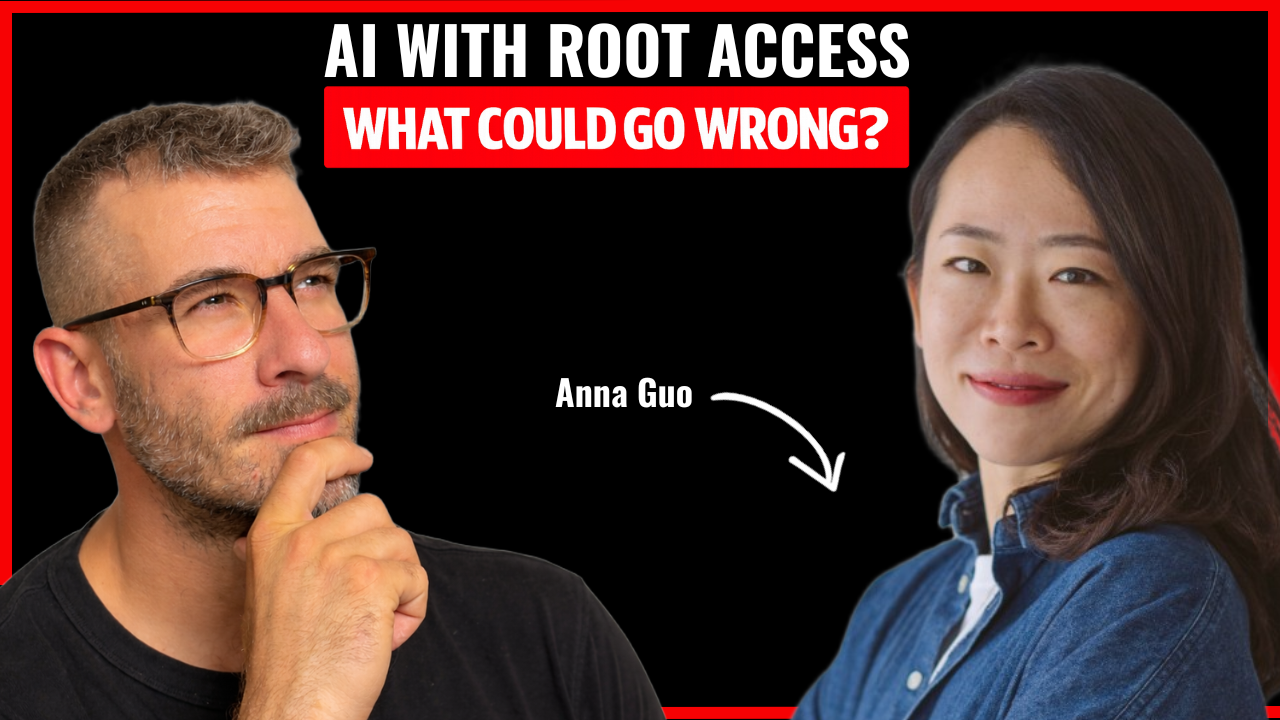
My next guest on Rok’s Legal AI Conversations is Anna Guo, founder of Legal Benchmarks and former legal counsel at Google and Ant Group.
We discuss why the upfront work before any tool decision is where most firms fail, why efficiency is often the wrong frame for senior legal practice, and what the gap between vendor predictions and day to day legal reality actually tells us about where this is all heading.
Each edition of Legal AI Brief brings practical lessons from firms using AI safely.